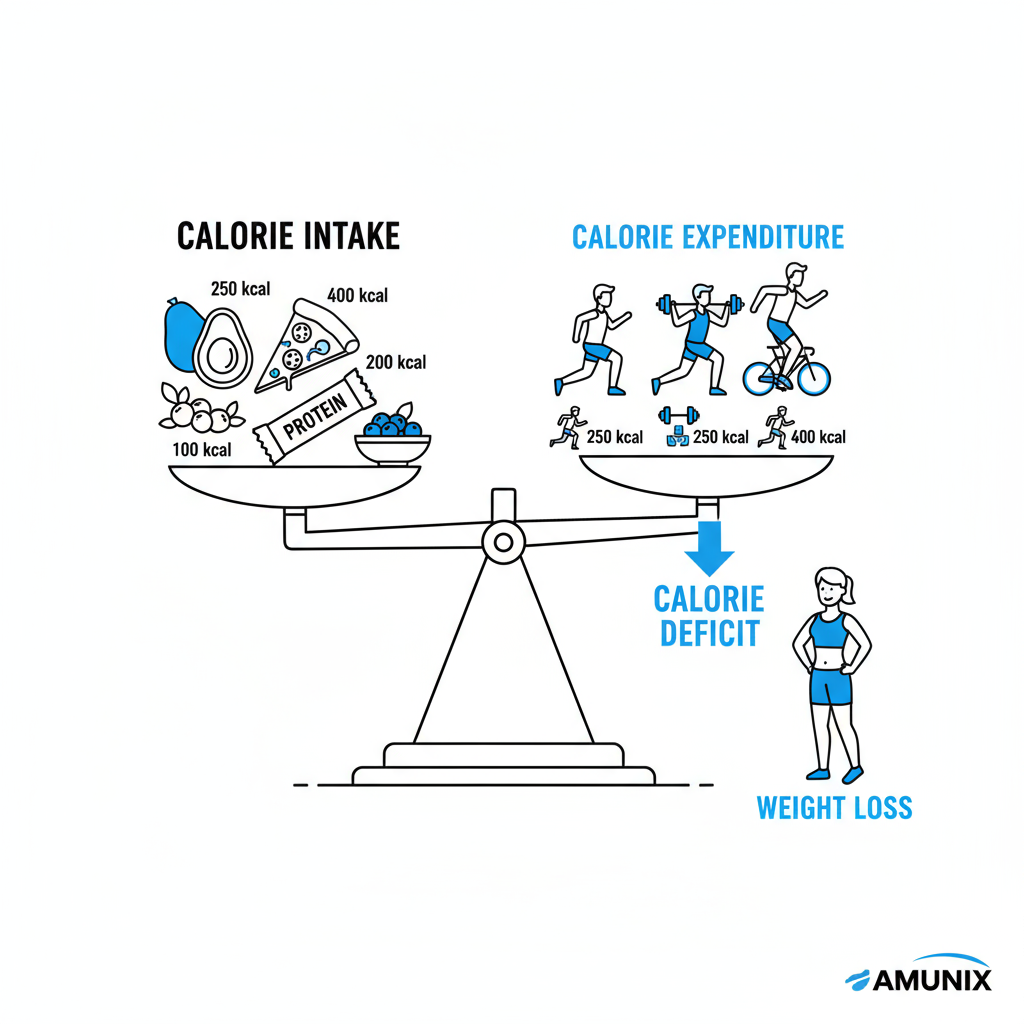
Reverse dieting explained: what it is, when it helps, and a simple plan to increase calories after a cut without rapid fat regain.
Reverse dieting is a structured way to increase calories after a cut, with the goal of improving energy and performance without rapid fat regain. It is not magic. It is just controlled transitions.
The goal: stop the rebound by planning the exit.
When Reverse Dieting Makes Sense
You finished a long cut and feel drained.
Your steps, training, and mood dropped.
You want to transition to maintenance without "all or nothing" eating.
Reverse Dieting vs Going Straight to Maintenance
Many people can simply return to maintenance calories and be fine. Reverse dieting is most useful if you tend to rebound hard or if your hunger is intense post-cut.
Approach
Pros
Cons
Straight to maintenance
Simple, fast recovery
Can spike hunger for some people
Reverse dieting
More controlled, easier mentally
Requires tracking and patience
Simple Reverse Diet Plan (4-8 Weeks)
Start from your current cut calories.
Add 50-150 calories per day for 7 days.
Hold and assess. If weight is stable, add another 50-150.
Prioritize carbs first (often best for performance) while keeping protein steady.
What to Track
Weekly average body weight
Waist measurement
Training performance and energy
Hunger and sleep
Frequently Asked Questions
Will I gain weight during reverse dieting?
You may see a small bump from glycogen and water as carbs increase. That is normal and not fat gain by default.
How long should I reverse diet?
Usually 4-8 weeks, or until you reach maintenance calories and energy feels normal again.
Transition Smoothly With AMUNIX
AMUNIX makes the "after the cut" phase easier by tracking calories, weight trends, and training performance in one place.
Stuck at a weight loss plateau? Here is why it happens and the step-by-step fixes that get fat loss moving again without extreme dieting.
A weight loss plateau is frustrating, but it usually has a simple cause: your calorie deficit shrank. As you lose weight, you burn fewer calories. If you keep eating the same, fat loss slows or stops.
Plateaus are data, not failure.
First: Make Sure It's a Real Plateau
Water weight can hide fat loss for 1-2 weeks. Before you change anything, check:
Has your weekly average weight been flat for 14+ days?
Are measurements and photos also unchanged?
Did stress, sleep, sodium, or a hard workout increase water retention?
The 6 Most Common Causes
Cause
Fix
Portion creep
Weigh foods for 7 days and reset accuracy
Less movement (NEAT)
Add steps (start +2,000/day)
Metabolic adaptation
Small calorie drop or a diet break
Poor sleep/stress
Fix sleep schedule, reduce deficit intensity
Weekend blowouts
Track weekly calories, not just weekdays
Over-aggressive deficit
Increase protein, lift, take diet breaks
How to Break a Plateau (Step-by-Step)
Track accurately for 7 days. No guessing.
Add steps. It is the least stressful lever.
Adjust calories slightly. Drop 100-200 calories/day if needed.
Keep lifting. Protect muscle and keep metabolism higher.
When a Diet Break Helps
If you have been dieting hard for 8-12 weeks, a 1-2 week diet break at maintenance can reduce fatigue and improve adherence. It is not a cheat week. It is planned.
Frequently Asked Questions
How long does a weight loss plateau last?
If you do nothing, it can last indefinitely. With accurate tracking and a small adjustment, most plateaus break in 2-4 weeks.
Should I cut more calories?
Only after you fix tracking and steps. Most plateaus are accuracy and movement issues, not a need for a massive cut.
Stay Consistent With AMUNIX
Plateaus are easier to solve when you have clean data. AMUNIX helps you track calories, steps, workouts, and weekly trends - so you can adjust with confidence.
Body recomposition explained: who it works for, how to set calories and protein, and how to track progress when the scale barely moves.
Body recomposition means losing fat and gaining muscle at the same time. It is possible - especially if you are new to lifting, returning after a break, or have plenty of fat to lose. It is also slower than a dedicated bulk or cut.
Recomp is real. It is just slower and needs consistency.
Who Can Recomp the Easiest?
Beginners: new training stimulus = fast gains
Detrained lifters: muscle memory is real
Higher body fat: more energy available during a deficit
People who start eating enough protein: big impact fast
The Recomp Setup (Calories, Protein, Training)
Lever
Target
Simple Tip
Calories
Maintenance to small deficit
Aim for 0.25-0.75% bodyweight loss/week
Protein
0.7-1.0 g/lb bodyweight
Spread across 3-5 meals
Training
Progressive overload 3-5x/week
Track lifts and push reps slowly up
What to Expect (Timeline)
In the first month, you might look leaner without the scale moving much. That is normal. Use photos, measurements, and strength numbers.
How to Know If It Is Working
Waist measurement trending down over 4-8 weeks
Strength maintained or slowly improving
Body weight stable or slowly decreasing
Frequently Asked Questions
Should I bulk or recomp?
If you are new to lifting or coming back, recomp is usually a great first phase. If you are already lean and trained, bulking and cutting phases are faster.
Can I recomp without lifting?
Not well. Recomp is mostly about the muscle-building signal from resistance training.
Track Your Recomp With AMUNIX
AMUNIX helps you track protein, workouts, and progress photos in one place - which is basically what recomp requires.
A practical keto diet guide: macros, foods to eat, common mistakes, and whether keto is a good fit for your training and fat loss goals.
The keto diet can work for fat loss, but it's not magic. It's a tool: it makes it easier for some people to eat fewer calories because appetite tends to drop when carbs are low.
Keto is high fat, moderate protein, very low carbs.
What Is the Keto Diet?
Keto (ketogenic) is a very low-carb diet designed to push your body into ketosis, where you use fat and ketones for energy instead of mostly glucose.
Macro
Typical Keto Range
What It Looks Like
Carbs
5-10%
Usually 20-50g net carbs/day
Protein
20-30%
Meat, eggs, Greek yogurt, whey
Fat
60-75%
Olive oil, avocado, nuts, fatty fish
Does Keto Work for Weight Loss?
It can. But the reason is still the same: calorie deficit. Keto often helps by reducing cravings and appetite for some people.
Keto vs. Everything Else
If you like low-carb foods and you can stick to it, keto can be a great fit. If you miss fruit, rice, and bread daily, keto turns into a weekly restart. Consistency beats the "best" diet.
The "keto flu" is usually an electrolyte issue (sodium, potassium, magnesium), not a sign keto is failing. If you feel weak or get headaches in week one, increase salt and fluids.
Eat enough protein. Keto is not a license to under-eat protein.
Don't fear vegetables. Low-carb veggies help digestion and micronutrients.
Track at first. Hidden carbs add up fast (sauces, snacks, drinks).
Keto for Training: What to Expect
Strength training is usually fine on keto once adapted. High-volume bodybuilding and intense HIIT often feel worse because carbs are a performance lever.
If you do a lot of hard conditioning, you may prefer a moderate-carb approach, or use keto in phases.
Frequently Asked Questions
How many carbs can I eat on keto?
Most people land around 20-50g net carbs/day. Your tolerance depends on activity level, body size, and how strict you are.
Is keto better than a calorie deficit?
Keto is one way to create a calorie deficit. It's not better by default. It's better if it helps you stick to the deficit.
Can I do keto long-term?
Some people love it long-term. Others do better cycling it. Pick the approach you can sustain without constant willpower.
Plan Your Macros With AMUNIX
AMUNIX helps you set calorie and macro targets, then track them without overthinking. If keto is your tool, tracking is your edge.
This article is for education, not medical advice. If you have diabetes, kidney disease, or take medication, talk to a clinician before going very low carb.
Calculate your Total Daily Energy Expenditure with our free TDEE calculator. Uses the Mifflin-St Jeor equation to estimate your daily calorie burn.
Your TDEE (Total Daily Energy Expenditure) is the number of calories you burn in a day. Know this number, and every nutrition decision gets easier — whether you're cutting, bulking, or maintaining.
Your TDEE is the foundation of any nutrition plan.
Free TDEE Calculator
This calculator uses the Mifflin-St Jeor equation — the most accurate TDEE formula for the general population according to the American Dietetic Association.
Calculate Your TDEE
Your Results
BMR
calories/day at rest
Your TDEE
calories/day total
Fat Loss
cal/day (-500)
Maintain
cal/day
Lean Bulk
cal/day (+300)
What Is TDEE?
TDEE stands for Total Daily Energy Expenditure. It's the total number of calories your body burns in a 24-hour period. It has four components:
Component
% of TDEE
What It Means
BMR (Basal Metabolic Rate)
60-70%
Calories burned just keeping you alive — breathing, circulation, cell repair
NEAT (Non-Exercise Activity)
15-20%
Walking, fidgeting, standing, daily movement outside of workouts
TEF (Thermic Effect of Food)
8-12%
Energy used to digest, absorb, and process the food you eat
Exercise is the smallest component of TDEE. BMR and NEAT together account for 75-90% of your daily calorie burn. This is why you can't out-train a bad diet, and why daily movement (walking, stairs, standing) matters more than most people think.
Activity Level Guide
The activity multiplier is where most people go wrong. Here's how to pick the right one:
Level
Multiplier
Real-World Example
Daily Steps
Sedentary
1.2
Desk job, drive to work, minimal walking, no exercise
< 5,000
Lightly Active
1.375
Desk job but walks during lunch, lifts 1-3x/week
5,000-7,500
Moderately Active
1.55
Active commute or on-feet job, lifts 3-5x/week
7,500-10,000
Very Active
1.725
Physical job or very active lifestyle, trains 6-7x/week
10,000-15,000
Extremely Active
1.9
Athlete, 2-a-days, physical labor + training
15,000+
Common Mistake
Most people overestimate their activity level. If you're unsure, pick one level lower than you think. Training 4x/week but sitting the other 23 hours a day? That's "Lightly Active," not "Very Active."
How to Use Your TDEE
For Fat Loss
Eat 300-500 calories below your TDEE. This produces ~0.5-1 lb of fat loss per week. A 500-calorie deficit is the standard recommendation — aggressive enough to see results, moderate enough to keep muscle and energy.
For Maintenance
Eat at your TDEE. Body weight stays roughly stable. Use this during performance phases, reverse dieting, or diet breaks.
For Muscle Gain
Eat 200-400 calories above your TDEE. A lean bulk minimizes fat gain while providing enough surplus to build muscle. The 300-calorie surplus in the calculator is the sweet spot for most natural lifters.
Why TDEE Calculators Aren't Perfect
Every TDEE calculator — including this one — gives you an estimate. Your actual TDEE varies based on:
Genetics — metabolic rate varies 200-300 cal between individuals of the same size
Body composition — more muscle = higher BMR, but the equation doesn't measure muscle directly
Adaptive thermogenesis — your body adjusts calorie burn when you diet (metabolic adaptation)
Daily variation — stress, sleep, temperature, and hormones all shift your burn day-to-day
The calculator gives you a starting point. The real data comes from tracking your weight over 2-3 weeks and adjusting:
Losing weight too fast (>1.5 lbs/week)? Add 200 cal.
Not losing? Subtract 200 cal or increase daily steps.
Weight stable but want to gain? Add 200 cal and monitor for 2 weeks.
TDEE vs. BMR: What's the Difference?
BMR is the energy your body uses at complete rest — if you stayed in bed all day doing nothing. TDEE includes everything on top of BMR: walking, training, digesting food, even fidgeting.
Never eat below your BMR unless medically supervised. Your body needs that baseline just to function — organs, brain, immune system, hormones.
Frequently Asked Questions
How accurate is a TDEE calculator?
Within 10-15% for most people. The Mifflin-St Jeor equation is the most validated formula, but it's still an estimate. Use it as a starting point and adjust based on real-world results over 2-3 weeks.
Should I eat back exercise calories?
If you used the activity multiplier, your exercise is already factored in. Don't double-count. If you selected "Sedentary" and then did a hard session, you could add back 50-70% of the estimated exercise calories — fitness trackers tend to overestimate.
Does metabolism slow with age?
Yes, but less than people think. A 2021 study in Science found metabolism stays fairly stable from age 20-60, declining only ~0.7% per year. Most of the "age-related" drop is from losing muscle and moving less — both of which are fixable.
How often should I recalculate my TDEE?
Every 4-8 weeks, or whenever your weight changes by more than 5 lbs. During a long cut, your TDEE drops as you get lighter — recalculating keeps your deficit accurate.
Is TDEE the same as maintenance calories?
Yes. TDEE = maintenance calories = the calorie intake at which your weight stays stable over time.
Track Your Nutrition With AMUNIX
AMUNIX uses your TDEE to set personalized calorie and macro targets, then helps you track meals and see how your nutrition connects to your training performance.
This calculator provides estimates based on validated equations. Individual needs vary. Consult a registered dietitian or healthcare provider for personalized nutrition advice.
Meal planning removes the daily "what should I eat?" decision. Build a weekly meal plan, batch cook in 90 minutes, and hit your calorie targets consistently.
Meal planning for weight loss works because it removes the daily decision of "what should I eat?" That decision, made 3-5 times a day while tired and hungry, is where most diets fall apart.
Planning your meals ahead of time removes the biggest obstacle to consistent eating.
Why Meal Planning Works
A 2022 study in the International Journal of Behavioral Nutrition found that people who meal plan are significantly more likely to have better diet quality, lower BMI, and less food waste. The mechanism is simple: when food decisions are made in advance (when you're rational and not hungry), you eat better.
Eliminates decision fatigue — no more "what should I eat?" at 7 PM
Controls portions — food is pre-portioned, so you eat what you planned
Reduces impulse eating — you've already committed to a plan
Saves money — you buy only what you need, waste less
Saves time — batch cooking is faster than cooking from scratch daily
Step 1: Know Your Numbers
Before you plan meals, you need a calorie target. Use our TDEE calculator to find your maintenance calories, then subtract 500 for a ~1 lb/week fat loss rate.
Set your macros: protein first (0.8-1 g/lb bodyweight), fat second (0.3-0.4 g/lb), then fill the rest with carbs. Use our macro calculator to get your exact numbers.
Step 2: Pick Your Proteins
Protein is the hardest macro to hit, so plan around it. Pick 2-3 proteins for the week:
Protein Source
Cal/4oz
Protein/4oz
Prep Method
Chicken breast
130
26g
Bake at 400F for 22 min
Ground turkey 93/7
170
22g
Brown in skillet, season versatile
Salmon
200
23g
Bake at 425F for 12-15 min
Lean beef 93/7
170
24g
Grill, pan-sear, or slow cook
Eggs
70/egg
6g/egg
Hard boil a dozen for snacking
Step 3: Build the Weekly Template
Don't reinvent the wheel every week. Create a rotating template with 3-4 meals and repeat them. Variety is overrated when it comes to weight loss — consistency matters more.
Meal
Option A
Option B
Option C
Breakfast
Eggs + toast + fruit
Greek yogurt + granola + berries
Protein oats + banana
Lunch
Chicken + rice + roasted veg
Turkey wrap + side salad
Beef stir-fry + brown rice
Snack
Protein shake + apple
Hard boiled eggs + carrots
Cottage cheese + nuts
Dinner
Salmon + sweet potato + greens
Turkey meatballs + pasta + salad
Chicken thighs + roasted potatoes
Step 4: Batch Cook on Sunday
One 90-minute session sets you up for the week. Here's the order:
The 90-Minute Meal Prep
0-5 min: Preheat oven to 400F. Start rice or potatoes.
5-15 min: Season and put proteins in the oven.
15-30 min: Chop vegetables, start roasting a sheet pan of mixed veg.
30-45 min: Hard boil eggs. Portion out snacks. Make a batch of grain (quinoa, rice).
45-60 min: Pull proteins, let rest. Start portioning into containers.
60-90 min: Assemble all meals. Label containers with macros. Clean up.
Step 5: Make It Last All Week
Refrigerate meals for days 1-4. Cooked chicken and rice are safe for 4 days in the fridge.
Freeze meals for days 5-7. Thaw the night before in the fridge.
Invest in good containers. Glass containers with snap-lock lids. They last years and don't absorb smells.
Don't prep salads. Leafy greens wilt. Prep the protein and grain, add fresh greens day-of.
Budget-Friendly Meal Planning
Eating for fat loss doesn't require expensive groceries. Here's a weekly grocery list that feeds one person for under $60:
Planning too many unique meals. More variety = more shopping, more prep time, more decision fatigue. 3-4 rotating meals is plenty.
Prepping food you don't like. "Healthy" food you hate won't get eaten. Build your plan around foods you already enjoy.
Forgetting snacks. If you don't plan snacks, you'll grab whatever's closest when hunger hits. Plan 1-2 daily snacks.
No backup plan. Life happens. Keep a frozen meal or a go-to restaurant order that fits your macros for days when the plan breaks.
Going from zero to hero. If you've never meal-prepped, don't start by prepping 21 meals. Start with lunch only. Add dinners next week.
Frequently Asked Questions
How many meals should I eat per day?
3-5 meals works for most people. Meal frequency doesn't affect metabolism — pick whatever schedule you'll stick with. If you're eating 180g protein, spreading it across 4+ meals optimizes muscle protein synthesis.
Can I eat out while meal planning?
Yes. Plan for it. If you know Friday is dinner out, eat lighter during the day to save calories. Most restaurants have nutrition info online — check before you go.
Does meal prep food taste bad by day 4?
Depends on the food. Rice, chicken, and most roasted veg hold up well for 4 days. Freeze anything for days 5-7. Some foods (stir-fry, chili, stew) actually taste better reheated.
What if I get bored eating the same meals?
Change your sauces and seasonings, not your base ingredients. Same chicken + rice can taste like Mexican, Asian, Italian, or BBQ depending on seasoning. Rotate your template every 2-3 weeks.
Plan Your Meals With AMUNIX
AMUNIX helps coaches build meal plans for their clients — or build your own. Set your calorie and macro targets, pick your foods, and let the app do the math.
Use this macro calculator to set daily protein, carbs, and fat targets for fat loss, maintenance, or lean muscle gain.
This macro calculator gives you a clean, realistic target for protein, carbs, and fat based on your goal. No gimmicks. Just a simple plan you can actually follow.
Learn how to count macros step by step — set your protein, carbs, and fat targets, track your food, and build the most useful nutrition skill for body composition.
Learning how to count macros is the single most useful nutrition skill you can develop. It replaces guesswork with structure — without forcing you to give up the foods you enjoy.
Counting macros gives you control over your body composition without rigid meal plans.
What Are Macros?
Macros (macronutrients) are the three nutrients your body needs in large quantities:
Protein is the most important macro to get right. Research consistently supports 0.7-1.0 g per pound of bodyweight for active people. This range maximizes muscle protein synthesis whether you're cutting or bulking.
Quick Protein Guide
180 lb person cutting: 140-180g protein/day
150 lb person maintaining: 105-150g protein/day
200 lb person bulking: 160-200g protein/day
Step 3: Set Fat
Fat supports hormones (especially testosterone), brain function, and vitamin absorption. Set it at 0.3-0.4 g per pound of bodyweight, or roughly 25-35% of total calories.
Going below 0.3 g/lb is not recommended — hormone production starts to suffer, particularly in women.
Step 4: Fill the Rest With Carbs
After protein and fat are set, the remaining calories go to carbs. Carbs fuel training performance, recovery, and mood. They're not the enemy — they're the performance lever.
Example: 180 lb Male, 2,400 Calories, Fat Loss
Protein: 180g x 4 cal/g = 720 calories
Fat: 65g x 9 cal/g = 585 calories
Carbs: (2,400 - 720 - 585) / 4 = 274g carbs
Daily targets: 180g protein / 274g carbs / 65g fat
Step 5: Track Your Food
Use a food tracking app or a simple notebook. Weigh your food with a kitchen scale for the first 2 weeks — most people are surprised how far off their portion estimates are.
Tracking Method
Accuracy
Effort
Best For
Kitchen scale + app
High
High
First 2 weeks learning portions, competition prep
App with estimating
Medium
Medium
Daily tracking after you've calibrated portions
Hand-size portions
Low
Low
Maintenance, general healthy eating
The Hand-Size Shortcut
Don't want to weigh everything forever? After 2 weeks of scale-based tracking, you can switch to hand portions:
Protein: 1 palm = ~25-30g protein (chicken, fish, meat)
Carbs: 1 cupped hand = ~25-30g carbs (rice, oats, potatoes)
Fat: 1 thumb = ~7-10g fat (oil, butter, nut butter)
Vegetables: 1 fist = 1 serving (eat freely)
For most people, this approach gets within 10-15% of exact numbers. Good enough for everything except competition prep.
Macro-Friendly Foods Cheat Sheet
High Protein
High Carb
Healthy Fat
Combo Foods
Chicken breast
White rice
Avocado
Whole eggs (P+F)
Greek yogurt (0%)
Sweet potato
Olive oil
Salmon (P+F)
Whey protein
Oats
Almonds
Black beans (P+C)
Egg whites
Fruit
Peanut butter
Milk (P+C+F)
Lean ground turkey
Pasta
Coconut oil
Quinoa (P+C)
Meal Timing and Macro Distribution
Spread your macros across 3-5 meals. The research-backed guidelines:
Protein: 25-40g per meal for optimal muscle protein synthesis. Don't dump 100g into one meal.
Carbs: Place most of your carbs around training — before (energy) and after (recovery).
Fat: Keep fat lower in pre/post-workout meals (slows digestion). Spread it across other meals.
Common Macro Counting Mistakes
Not counting cooking oils. A tablespoon of olive oil is 120 calories. Three tablespoons while cooking a meal adds 360 invisible calories.
Ignoring sauces and dressings. Ranch, mayo, teriyaki — these add up fast. Log them.
Eyeballing portions after day one. Keep using the scale for at least 2 weeks before switching to estimates.
Skipping days. Consistency matters more than precision. An imperfect logged day beats an untracked day.
Eating the same thing every day to make tracking easier. Works short-term but kills adherence. Variety keeps you sane.
How Long Until Counting Macros Gets Easy?
Most people hit their groove after 10-14 days. The first week feels tedious — every meal requires looking things up. By week two, you know the macros of your go-to foods from memory. By week three, you're logging meals in under a minute.
After a month, many people shift to "intuitive tracking" — they know their portions well enough to stay within 10% without logging every gram. That's the goal. Counting macros is a skill, not a life sentence.
Frequently Asked Questions
Do I have to hit my macros exactly?
No. Within 5-10g of each target is fine. Protein is the most important one to get close. Carbs and fat can flex a bit in either direction as long as total calories stay on target.
Can I eat junk food and still hit my macros?
Technically yes — that's what IIFYM (If It Fits Your Macros) means. But 80% of your food should come from whole, nutrient-dense sources. The remaining 20% gives you flexibility for foods you enjoy.
What about fiber and micronutrients?
Aim for 25-35g of fiber daily (most people fall short). If 80% of your diet comes from whole foods — vegetables, fruits, lean proteins, whole grains — micronutrients take care of themselves.
Is counting macros better than just counting calories?
For body composition, yes. Two people eating 2,000 calories get very different results depending on macro split. One might be 150g protein and build muscle; another might be 60g protein and lose muscle. Macros give you control over what changes, not just whether the scale moves.
Track Macros Effortlessly With AMUNIX
AMUNIX makes macro tracking simple — log your meals, see your macro breakdown in real time, and track how your nutrition drives your training results.
Find out exactly how many calories you need to eat to lose weight. Calculate your personal calorie target based on your body, activity, and goals.
The answer to "how many calories to lose weight" depends on exactly one thing: how many calories you burn. Eat less than that number, and you lose weight. That's it.
Your calorie target is personal — it depends on your body, activity level, and goals.
The Short Answer
For most people trying to lose weight at a sustainable rate (1 lb/week):
Category
Typical Range
Notes
Average woman (sedentary-moderate)
1,400-1,700
Based on TDEE of 1,900-2,200 minus 500
Average man (sedentary-moderate)
1,800-2,200
Based on TDEE of 2,300-2,700 minus 500
Active woman (trains 4-5x/week)
1,600-2,000
Higher TDEE from exercise allows more food
Active man (trains 4-5x/week)
2,200-2,600
Higher TDEE from exercise allows more food
These are rough averages. Your actual number depends on your specific body. Use our TDEE calculator to get a personalized target.
How to Calculate Your Exact Number
Three-step process:
Step 1: Find Your TDEE
Your TDEE (Total Daily Energy Expenditure) is how many calories you burn in a day — including breathing, walking, digesting food, and exercise. The Mifflin-St Jeor equation is the most accurate formula:
Mifflin-St Jeor Equation:
Men: BMR = (10 x weight in kg) + (6.25 x height in cm) - (5 x age) + 5
Women: BMR = (10 x weight in kg) + (6.25 x height in cm) - (5 x age) - 161
Then multiply BMR by your activity factor (1.2-1.9) to get TDEE.
A 500-calorie daily deficit produces approximately 1 lb of fat loss per week (3,500 calories = ~1 lb of fat). This rate is sustainable, preserves muscle, and doesn't tank your energy.
Step 3: Set a Floor
Never go below 1,200 calories (women) or 1,500 calories (men) without medical supervision. Below these levels, it's hard to get adequate protein, vitamins, and minerals.
Why "1,200 Calories" Is Usually Wrong
The 1,200-calorie recommendation has been floating around for decades. For most people, it's unnecessarily aggressive:
A 160 lb woman who walks daily and lifts 3x/week has a TDEE around 2,100. Her deficit target: 1,600 — not 1,200.
A 200 lb man with a desk job has a TDEE around 2,400. His deficit target: 1,900 — not 1,200.
1,200 calories makes it nearly impossible to hit adequate protein (100-150g) while eating enough vegetables, fruit, and healthy fats.
The Problem With Going Too Low
Aggressive deficits (1,000+ cal below TDEE) cause muscle loss, metabolic slowdown, increased hunger hormones (ghrelin), decreased satiety hormones (leptin), reduced daily movement (NEAT drops), worse sleep, and higher cortisol. The result: you lose weight fast, hit a wall, and rebound harder.
Real-World Examples
Person
Stats
TDEE
Target Cal
Expected Loss
Sarah
5'5", 155 lb, 30F, light activity
1,950
1,450
~1 lb/week
Mike
5'10", 200 lb, 35M, moderate activity
2,650
2,150
~1 lb/week
Jessica
5'7", 180 lb, 28F, very active
2,500
2,000
~1 lb/week
David
6'0", 240 lb, 40M, sedentary
2,500
2,000
~1 lb/week
Adjusting Over Time
Your calorie target isn't static. As you lose weight, your TDEE drops — a lighter body burns fewer calories. Here's when to recalculate:
Every 10 lbs lost — recalculate TDEE with your new weight
When progress stalls for 2+ weeks — weight plateaus happen from water retention, but if the scale hasn't moved in 14 days, adjust
Every 8-12 weeks — take a diet break (eat at maintenance for 1-2 weeks) to reset hormones, then resume
Tips to Make Your Calorie Target Sustainable
Eat more protein. Protein keeps you full and preserves muscle. Aim for 30%+ of calories from protein.
Eat more vegetables. Vegetables are high-volume, low-calorie. A pound of broccoli is 150 calories. A pound of rice is 600.
Walk more. Increasing daily steps from 4,000 to 8,000 burns an extra 200-300 calories/day — letting you eat more while still being in a deficit.
Cut liquid calories. Juice, soda, cream in coffee, alcohol — these add up without making you full. Switch to water, black coffee, or zero-cal drinks.
Don't restrict food groups. Eat carbs. Eat fat. Eat dessert occasionally. The most sustainable deficit is one that doesn't feel like punishment.
Frequently Asked Questions
Is 1,500 calories enough to lose weight?
For many people, yes — but it depends on your TDEE. A 5'2" sedentary woman has a TDEE around 1,600, so 1,500 is barely a deficit. A 6'0" active man has a TDEE around 2,800, so 1,500 is aggressively low. Calculate your personal number.
How fast should I lose weight?
0.5-1% of bodyweight per week is the sustainable range. For a 180 lb person, that's 0.9-1.8 lbs/week. Faster than that and you risk muscle loss, energy crashes, and binge-restrict cycles.
Should I eat less on rest days?
Not necessarily. Keeping calories consistent daily is simpler and works just as well. If you prefer cycling, reduce by 100-200 on rest days and add them to training days.
Why am I not losing weight at 1,500 calories?
Three likely reasons: (1) You're eating more than 1,500 — tracking errors are common, especially with cooking oils, sauces, and "just a bite" snacking. (2) Your TDEE is lower than you think — recalculate honestly. (3) Water retention is masking progress — stress, sodium, sleep, and hormones all affect water weight. Track for 3+ weeks before making changes.
Calculate Your Exact Number
Stop guessing. Use our free calculators to find your personalized calorie target:
A high protein diet is the most research-backed nutrition strategy for body composition. Learn how much protein you need and the best ways to hit your target.
A high protein diet is the most consistently supported nutritional strategy in exercise science. It builds muscle, preserves muscle during a cut, keeps you full, and burns more calories during digestion than any other macronutrient.
High protein eating supports every fitness goal — fat loss, muscle gain, and body recomposition.
How Much Protein Do You Actually Need?
The RDA of 0.36 g/lb is the minimum to avoid deficiency — not the amount for optimal body composition. Research on active people tells a different story:
Goal
Protein Target
Research Basis
General health (sedentary)
0.5-0.7 g/lb
Above RDA, supports daily function and aging
Muscle building
0.7-1.0 g/lb
Meta-analysis by Morton et al. (2018), British Journal of Sports Medicine
Fat loss (while lifting)
0.8-1.2 g/lb
Higher protein during a deficit preserves muscle (Helms et al., 2014)
Athletes / heavy training
0.9-1.2 g/lb
ISSN position stand (Jager et al., 2017)
Simple Rule
If you lift weights and care about body composition: aim for 0.8-1.0 g per pound of bodyweight. This covers virtually all scenarios — cutting, bulking, or maintaining.
5 Reasons High Protein Works
1. Muscle Protein Synthesis
Protein provides the amino acids your muscles need to repair and grow after training. Without adequate protein, your training stimulus goes to waste — you break muscle down but can't rebuild it.
2. Highest Thermic Effect
Your body burns 20-30% of protein calories just digesting it, compared to 5-10% for carbs and 0-3% for fat. Eating 200g of protein burns an extra 160-240 calories per day through digestion alone.
3. Most Satiating Macro
Protein is the most filling macronutrient per calorie. Multiple studies show high-protein diets reduce hunger, snacking, and total calorie intake without conscious effort. During a calorie deficit, this makes a massive difference in adherence.
4. Muscle Preservation During Cuts
When you eat in a deficit, your body can burn muscle for energy. High protein intake (combined with resistance training) is the most effective strategy to prevent this. A 2016 study by Longland et al. found that subjects eating 1.1 g/lb during an aggressive deficit gained lean mass while losing fat.
5. Body Recomposition
For beginners and intermediates, high protein + lifting + a slight deficit can produce simultaneous fat loss and muscle gain. This is the holy grail of body composition, and protein is the key driver.
Best High-Protein Foods
Food
Serving
Protein
Calories
Protein/Cal Ratio
Chicken breast
6 oz
38g
190
80%
Greek yogurt (0%)
1 cup
17g
100
68%
Egg whites
1 cup
26g
120
87%
Whey protein
1 scoop
25g
120
83%
Tuna (canned in water)
1 can
30g
130
92%
Cottage cheese (1%)
1 cup
28g
160
70%
Shrimp
6 oz
36g
170
85%
How to Hit Your Protein Target
Prioritize protein at every meal. Aim for 30-40g per meal across 4 meals. Don't front-load or back-load.
Prep protein in bulk. Grill 3 lbs of chicken on Sunday. Hard boil a dozen eggs. Ready-to-eat protein solves 80% of the problem.
Use protein supplements strategically. Whey protein is a convenient tool, not a necessity. Use it when whole food isn't practical — post-workout, travel, or when you're short at the end of the day.
Don't forget dairy. Greek yogurt and cottage cheese are protein-dense, cheap, and require zero cooking. Two cups of Greek yogurt = 34g protein.
Stack your snacks. Replace chips with jerky, nuts with cottage cheese, granola bars with protein bars. Small swaps accumulate.
Is Too Much Protein Harmful?
Common concerns, addressed by research:
Concern
Evidence
Reality
"High protein damages kidneys"
Debunked
No evidence of kidney damage in healthy individuals up to 1.5 g/lb. Pre-existing kidney disease is a different story — consult your doctor.
"It causes bone loss"
Debunked
High protein actually improves bone density. The calcium-loss theory has been disproven by multiple meta-analyses.
"You can only absorb 30g per meal"
Oversimplified
Your body absorbs all protein you eat. But ~30-40g per meal maximizes muscle protein synthesis per meal. More is still absorbed — it's just used for other functions.
Lunch: 6 oz chicken breast, rice, mixed veg — 40g protein
Snack: Greek yogurt + protein powder + berries — 42g protein
Dinner: 6 oz salmon, sweet potato, asparagus — 38g protein
Evening: Cottage cheese + almonds — 24g protein
Total: 180g protein | ~2,100 calories
Frequently Asked Questions
Can I get enough protein without meat?
Yes. Greek yogurt, cottage cheese, eggs, whey protein, tofu, tempeh, lentils, and protein powder make it possible. It takes more planning but it's doable at 0.8-1 g/lb.
Is whey protein necessary?
No. It's a convenience tool. Whole food protein is just as effective. Whey is useful when you're short on time or struggling to hit your target through food alone.
When should I eat protein?
Spread it across 3-5 meals, with at least 20g within 2 hours of training. Total daily intake matters more than timing, but even distribution is slightly better for muscle growth.
Will high protein make me bulky?
No. Gaining significant muscle requires a calorie surplus plus years of progressive resistance training. Protein in a deficit helps you lose fat and preserve the muscle you have — it won't magically add bulk.
Track Your Protein With AMUNIX
AMUNIX tracks your protein intake meal by meal and shows you where you stand against your daily target — so you never fall short.
Nutritional guidance is for informational purposes. Consult a registered dietitian for personalized recommendations, especially if you have kidney disease or other medical conditions.
A calorie deficit is the one requirement for fat loss. Learn how to set the right deficit size, protect muscle, and avoid common mistakes.
A calorie deficit is the only requirement for fat loss. Not keto, not intermittent fasting, not cutting carbs — a deficit. Everything else is just a method to get there.
Fat loss comes down to one thing: burning more calories than you eat.
What Is a Calorie Deficit?
A calorie deficit means you're eating fewer calories than your body burns in a day. When this happens, your body pulls from stored energy (fat) to make up the difference. That's fat loss.
The math is straightforward:
Calories In < Calories Out = Fat Loss
~3,500 calorie deficit = ~1 pound of fat lost
How Big Should Your Deficit Be?
Not all deficits are equal. Too small and you won't notice results. Too large and you'll lose muscle, tank your energy, and quit.
Deficit Size
Cal/Day
Weekly Loss
Who It's For
Risk Level
Small
200-300
0.4-0.6 lb
Already lean, want to preserve max muscle
Low
Moderate
400-500
0.8-1.0 lb
Most people — best balance of speed and sustainability
A 500-calorie daily deficit produces roughly 1 lb of fat loss per week. It's aggressive enough to see visible progress month-over-month, but moderate enough to maintain energy, strength, and adherence. Start here.
How to Create a Calorie Deficit
You have three levers. Most people should use a combination:
1. Eat Less (Diet)
The most direct path. Reduce portion sizes, swap calorie-dense foods for voluminous ones, cut liquid calories. A few easy wins:
Swap 2 tbsp peanut butter (190 cal) for PB2 powder (60 cal) — saves 130 cal
Swap a 20 oz soda (240 cal) for sparkling water (0 cal) — saves 240 cal
Swap ground beef 80/20 (290 cal/4oz) for 93/7 (170 cal/4oz) — saves 120 cal
2. Move More (NEAT + Exercise)
Add daily steps and structured exercise. Walking is the most underrated fat-loss tool — 10,000 steps burns roughly 300-500 extra calories depending on bodyweight.
3. Both (Recommended)
Split the deficit. Eat 250 fewer calories AND burn 250 more through movement. This way you're not starving yourself or spending hours on cardio.
What Happens in Your Body During a Deficit
When you eat less than you burn:
Glycogen depletes first — stored carbs in your liver and muscles, plus water. This is why you lose 3-5 lbs fast in week one (mostly water).
Fat oxidation increases — your body starts breaking down stored fat for energy. This is what you actually want.
Muscle can be lost — if protein is too low or the deficit is too aggressive, your body burns muscle tissue for energy. Preventable with adequate protein and resistance training.
Metabolic adaptation kicks in — after 8-12 weeks, your body down-regulates calorie burn (hormones, NEAT, fidgeting all decrease). This is why plateaus happen.
Protecting Muscle While in a Deficit
Fat loss without muscle loss requires three things:
Strategy
Why It Works
Target
High protein intake
Provides amino acids to maintain/repair muscle tissue
0.8-1.0 g/lb bodyweight
Resistance training
Signals your body to keep muscle — "use it or lose it"
3-5 sessions/week
Moderate deficit
Less muscle breakdown than aggressive cuts
500 cal/day max for most people
Why Deficits Fail (and How to Fix It)
1. Weekend Overeating
You're in a 500-cal deficit Monday through Friday (2,500 cal saved) but overeat by 1,500 on Saturday and Sunday. Net weekly deficit: zero. Fix: Track weekends the same as weekdays, or give yourself a smaller deficit that you can sustain 7 days.
2. Metabolic Adaptation
After 8-12 weeks of dieting, your body adapts — NEAT drops, hormones shift, hunger increases. Fix: Take a 1-2 week diet break at maintenance calories, then resume your deficit.
3. Liquid Calories
Juice, coffee drinks, smoothies, alcohol — these add up fast and don't trigger fullness. Fix: Drink water, black coffee, or zero-calorie beverages.
4. Undercounting
Studies show most people underreport calories by 30-50%. Fix: Use a food scale for at least 2 weeks to calibrate your portions.
How Long Should You Stay in a Deficit?
Plan your deficit in 8-16 week phases. After that, bring calories back to maintenance for 2-4 weeks (a diet break). This resets hormones, restores NEAT, and gives you a psychological break before the next phase if needed.
Most people can lose 0.5-1% of bodyweight per week sustainably. For a 200 lb person, that's 1-2 lbs/week, meaning 12-24 lbs over a 12-week cut.
Frequently Asked Questions
Is 1,200 calories enough?
For most adults, no. 1,200 is near or below BMR for most people, making it hard to get adequate protein and micronutrients. The only exception is very small, sedentary individuals under medical supervision.
Can you build muscle in a deficit?
Beginners and people returning after a break can — it's called body recomposition. Experienced lifters generally can't. The more trained you are, the harder it is to gain muscle without a surplus.
Why did I stop losing weight?
Plateaus happen for three reasons: (1) You've lost weight so your TDEE is now lower — recalculate. (2) You're eating more than you think — tighten up tracking. (3) Water retention is masking fat loss — stress, sodium, sleep, and menstrual cycles all cause temporary water weight. Give it 2 weeks before adjusting.
Do I need cardio to be in a deficit?
No. You can create a deficit entirely through food. But walking and cardio help — they let you eat more while still being in a deficit. Most people find a combination of diet + movement more sustainable than diet alone.
Track Your Deficit With AMUNIX
AMUNIX calculates your deficit, tracks your intake, and shows you weekly trends so you know exactly where you stand — no guessing.
Macro tracking helps you control body composition by setting clear targets for protein, carbs, and fat. Learn the exact steps to set your macros.
If you feel like you’re training hard but your body isn’t changing, macro tracking is the missing lever. Calories decide whether you gain or lose. Macros decide what you gain or lose — muscle, fat, or both.
Macro tracking turns “eating healthy” into a measurable plan.
What Is Macro Tracking?
Macro tracking means setting a daily target for protein, carbs, and fat — then hitting those numbers consistently. You still eat foods you enjoy, but with structure.
Protein builds and protects muscle
Carbs fuel training and recovery
Fat supports hormones and satiety
Macro Tracking in One Line
Set a calorie target, assign protein first, then split carbs and fats based on preference and training demands.
Step 1: Set Your Calorie Target
Macros only matter after calories are right. If your goal is:
Fat loss: start with a 15-20% deficit
Muscle gain: start with a 5-10% surplus
Recomp: aim for maintenance calories
Step 2: Set Protein First
Protein is the anchor. A simple target:
0.7-1.0g per pound of body weight
If you’re unsure, start at 0.8g/lb and adjust from there.
Step 3: Split Carbs and Fats
Once protein is set, fill the rest of your calories with carbs and fat based on training style:
Training Style
Carbs
Fats
High volume lifting
45-55%
20-30%
Mixed training
35-45%
25-35%
Lower carb preference
25-35%
35-45%
Protein is the anchor, carbs fuel training, and fats support hormones.
Example Macro Split (2,200 Calories)
Sample Macro Split
Protein 170g • Carbs 230g • Fat 60g
Macro Tracking Mistakes to Avoid
All carbs, no protein: your calories are right but body composition stalls
Tracking for one week: results come from consistency, not perfection
Ignoring fiber: 25-35g/day keeps hunger under control
Never adjusting: if weight hasn’t moved in 2-3 weeks, tweak calories
FAQ
Do I have to track forever?
No. Most people track for 4-12 weeks, learn portions, then move to a looser version of the same plan.
What if I miss my macros?
Stay within 5-10% most days. That’s enough to see results.
Is macro tracking better than calorie tracking?
It’s more precise. Calories alone can lead to muscle loss if protein is too low.
Part of the AMUNIX Nutrition silo — building your complete fitness knowledge base.
Always consult with a healthcare professional or registered dietitian before making significant changes to your diet. This guide is for educational purposes only.
Post workout nutrition is about protein, carbs, and timing. Learn exactly what to eat after training for faster recovery and better results.
You don’t need a magic shake the second you rack the bar, but post workout nutrition does matter. The goal is simple: refuel muscle glycogen, kickstart recovery, and give your body the protein it needs to rebuild.
A balanced post-workout meal beats a fancy supplement every time.
The 3 Goals After Training
Protein: repair and build muscle
Carbs: refill glycogen so you can train hard tomorrow
Fluids + electrolytes: rehydrate and reduce fatigue
Do You Need to Eat Immediately?
The old “30-minute anabolic window” is overstated. A more realistic window is 0-3 hours, depending on when you last ate. If you had a meal within 2 hours before training, you can relax. If you trained fasted, eat sooner.
Part of the AMUNIX Nutrition silo — building your complete fitness knowledge base.
Always consult with a healthcare professional or registered dietitian before making significant changes to your diet. This guide is for educational purposes only.
Discover the science behind weight loss and calculate your exact daily calorie needs with our interactive calculator. Learn the simple math that makes weight loss predictable and achievable.
Demystifying Weight Loss: It's Simpler Than You Think
If you've ever felt overwhelmed by the countless weight loss strategies flooding the internet, you're not alone. Between keto, intermittent fasting, detox teas, and magic supplements, it's easy to lose sight of the fundamental truth about weight loss.
At its core, weight loss isn't about mysterious metabolic hacks or secret formulas—it's about simple, predictable math. Your body operates on the same principles of energy balance that govern everything in the physical world. Once you understand these principles, you gain the power to achieve your weight loss goals without confusion or frustration.
What Exactly Is a Calorie?
Think of a calorie as a unit of energy—like the fuel in your car's gas tank. Scientifically, a calorie is the amount of energy needed to raise the temperature of one gram of water by one degree Celsius. In nutrition terms, it's the energy your body extracts from food and uses to power everything you do.
Every bite you take contains energy, and every movement you make burns energy. When you eat, you're refueling your body's tank. When you walk, think, breathe, or exercise, you're burning that fuel. This simple exchange is the foundation of weight management.
Understanding Energy Balance
Your body is incredibly smart about managing energy. It maintains a complex system that:
Tracks incoming energy from the food you eat
Monitors outgoing energy used for basic functions and activities
Stores excess energy as fat for future use
Accesses stored energy when intake is insufficient
This system evolved over millennia to help humans survive periods of feast and famine. Unfortunately, in our modern world of constant feasting, this survival mechanism can work against us.
Understanding the balance between calories consumed and calories burned is key to sustainable weight loss
The Fundamental Principle: Calorie Deficit
Here's the unbreakable rule of weight loss: To lose weight, you must consume fewer calories than your body burns. This is called a calorie deficit.
When your body needs more energy than you're providing through food, it turns to its reserves—primarily stored fat. For every 3,500 calories of stored energy your body accesses, you lose approximately one pound of fat.
This isn't a theory or a diet trend—it's a biological fact as reliable as gravity. Whether you're eating carbs, fats, or proteins, the calorie balance determines weight change.
How the 3,500-Calorie Rule Works
The 3,500-calorie rule comes from research showing that one pound of body fat contains approximately 3,500 calories of stored energy. This means:
A daily deficit of 500 calories = 1 pound of weight loss per week
A daily deficit of 1,000 calories = 2 pounds of weight loss per week
This predictable relationship allows us to create personalized weight loss plans with mathematical precision. No guesswork required—just simple, sustainable math.
Your Personalized Calorie Blueprint
Now that you understand the science, let's calculate your personal calorie needs. Everyone's body is different, with unique energy requirements based on age, gender, height, weight, and activity level.
Our interactive calculator uses the scientifically validated Mifflin-St Jeor equation, which research shows to be more accurate than older formulas for calculating resting metabolic rate.
Calculate Your Daily Calorie Needs
Your Personalized Calorie Blueprint
BMR
calories/day
TDEE
calories/day
Target
calories/day
To reach your goal, consume calories per day
How to Use Your Calculator
Enter Your Basic Information: Age, weight, height, and biological sex help establish your baseline metabolic needs.
Select Your Activity Level: Be honest here—most people overestimate their activity. Your calculator needs accurate input to provide useful results.
Choose Your Weight Loss Goal: Select a realistic weekly weight loss target. Remember that sustainable weight loss is typically 1-2 pounds per week.
Get Your Magic Number: The calculator will instantly display your personalized daily calorie target—the exact number you need to achieve your goals.
Why the Mifflin-St Jeor Equation?
Our calculator uses the Mifflin-St Jeor equation because research has shown it to be more accurate than older formulas like Harris-Benedict. Developed in 1990 and validated in numerous studies since, this equation accounts for modern lifestyles and body compositions, giving you a more precise baseline for your weight loss journey.
The equation considers:
Body mass (heavier bodies burn more calories)
Height (taller bodies have more surface area and burn more calories)
Age (metabolism naturally slows with age)
Sex (men typically have more muscle mass and burn more calories at rest)
From Knowledge to Results: Why Tracking Matters
Knowing your calorie target is just the first step. The real challenge—and where most people struggle—is consistently hitting that number day after day. This is where the Amunix app transforms your weight loss journey from frustrating to effortless.
Your weight loss journey is a marathon, not a sprint. Consistent tracking leads to sustainable results.
The Pain Points of Traditional Tracking
Let's be honest: most calorie tracking methods are tedious and unsustainable:
Manual logging requires searching databases and guessing portion sizes
Barcode scanning apps often miss fresh foods or restaurant items
Estimating calories leads to inaccuracies that stall progress
Complex interfaces make tracking feel like a part-time job
These frustrations cause 90% of people to abandon calorie tracking within weeks, leaving their weight loss goals unfulfilled.
The Amunix Solution: Effortless Precision Tracking
Amunix was designed by fitness and nutrition experts who experienced these same frustrations. We've transformed calorie tracking from a chore into a seamless, even enjoyable experience.
Simple, Effective Meal Tracking
Amunix makes tracking your meals straightforward and hassle-free. Log what you eat with our intuitive interface designed to minimize friction and maximize consistency.
Personalized Daily Calorie Targets
Based on your goals and activity level, Amunix calculates your exact daily calorie target and tracks your progress automatically. No guesswork, no confusion—just clear numbers that guide your decisions.
Visual Progress Tracking
See your progress come to life with easy-to-understand charts and graphs. Track your calorie intake, monitor trends over time, and celebrate milestones as you reach them.
Comprehensive Fitness Integration
Amunix isn't just about calories—it's your complete fitness companion:
Personalized workout plans tailored to your fitness level and goals
Nutrition guidance with meal plans that fit your calorie targets
Progress tracking across multiple metrics to keep you motivated
Expert support to guide you through your fitness journey
Your Transformation Starts Now
You've discovered your personalized calorie blueprint—the exact number that will unlock your weight loss success. You understand the science behind weight loss and have the knowledge to achieve your goals.
The question is: will you let this knowledge remain theoretical, or will you transform it into real-world results?
Every day you wait is another day your goals remain out of reach. Every meal you don't track is a missed opportunity to progress. The path to your ideal body isn't complicated—it's just a series of small, consistent decisions.
Take the Next Step
Download Amunix today and turn your calorie blueprint into your new reality. With our 30-day money-back guarantee, there's no risk—only the certainty of finally achieving the weight loss results you deserve.
Your future self is waiting. The math is simple. The path is clear. The only thing missing is you.
Always consult with a healthcare professional before starting any new weight loss program. Individual results may vary based on adherence and personal factors.
Backed by Science, Trusted by Users
Amunix combines evidence-based nutrition science with user-friendly technology